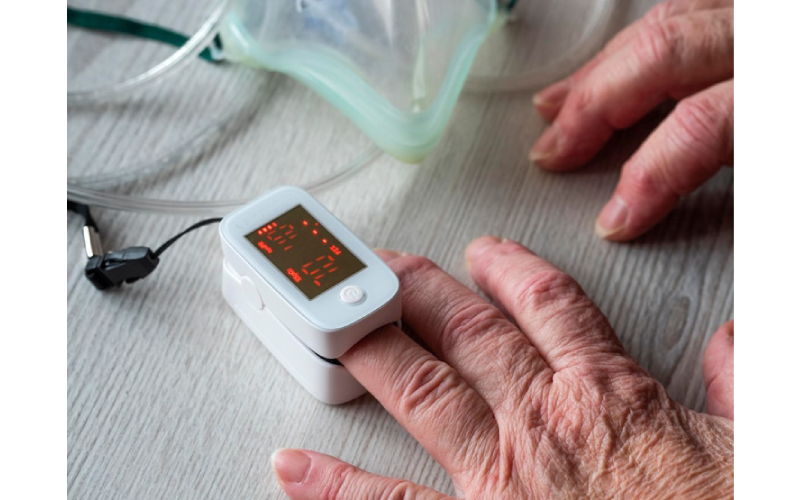
A home sleep apnea test (HSAT) is a portable device used at home to detect obstructive sleep apnea by monitoring breathing and blood oxygen levels overnight. Before the test, a healthcare provider evaluates symptoms and prescribes the device, which patients either receive by mail or pick up. The test involves wearing sensors like nasal airflow tubes and a pulse oximeter while sleeping in a familiar environment. Afterward, the device is returned for data analysis to check for breathing interruptions and OSA severity. Though more convenient and affordable than lab tests, HSAT may miss other sleep disorders or have technical issues during use.
What Is a Home Sleep Apnea Test?
A Home Sleep Apnea Test (HSAT) is a portable device used at home to detect obstructive sleep apnea by monitoring breathing patterns overnight. It tracks airflow, pauses in breathing (apneas), and oxygen levels to identify interruptions during sleep. Unlike a traditional sleep study done in a lab, HSAT is designed for use in a patient’s usual sleeping environment, making the data more natural and comfortable to collect. There are two main types of home tests: Type 3, which collects detailed information including airflow, breathing effort, oxygen saturation, heart rate, snoring, and body position; and Type 4, which records fewer signals, typically just airflow and oxygen levels. HSAT calculates the severity of apnea by averaging the number of breathing interruptions per hour spent in bed, rather than actual sleep time. This test is specifically aimed at diagnosing obstructive sleep apnea and is not suitable for other sleep disorders like narcolepsy or restless leg syndrome. It is usually prescribed by a healthcare provider based on symptoms and risk factors, especially for those suspected of having moderate to severe obstructive sleep apnea without complex medical conditions. The results help determine if treatments like CPAP therapy are needed or if further testing is required.

Components and Sensors in a Home Sleep Apnea Test
A home sleep apnea test uses several key sensors to track breathing and oxygen levels while you sleep. The nasal breathing sensor consists of small tubes placed just inside the nostrils, designed to detect airflow by measuring subtle changes in air pressure as you breathe in and out. This helps identify pauses or reductions in breathing, which are central to diagnosing sleep apnea. A pulse oximeter, clipped onto a fingertip, continuously monitors blood oxygen saturation throughout the night, showing if oxygen levels drop during apnea events. To distinguish between obstructive apnea (where breathing effort is present) and central apnea (where it is absent), an effort belt is worn around the chest or abdomen. This elastic band measures the effort your body makes to breathe by sensing chest or abdominal movement. Some devices include an optional microphone or sound sensor that records snoring sounds, providing extra information about airway obstruction. All these sensors connect via wires or tubing to a compact data recorder, which digitally stores the collected information. This device usually features start and stop buttons plus indicator lights to display recording status and battery life. More advanced models may also track body position to determine if apnea events are influenced by how you sleep. Importantly, the sensors are designed to be lightweight and minimally intrusive, helping you sleep as naturally as possible. Proper placement and secure attachment of all sensors are essential to ensure accurate data collection and avoid disconnections during the night.
Step-by-Step Guide to Using a Home Sleep Apnea Test
The first step in using a home sleep apnea test (HSAT) is consulting with a healthcare provider. They will evaluate symptoms such as loud snoring, daytime sleepiness, or morning headaches to determine if a home test is suitable. Once prescribed, you can receive the testing kit either by mail, from a clinic, or a pharmacy. The kit will come with clear instructions on how to set up the device and where to place the sensors.
On the night of the test, it’s important to maintain your usual sleep and wake times to capture a typical night’s breathing patterns. Before going to bed, attach the sensors exactly as instructed. This usually includes a nasal cannula to monitor airflow, a pulse oximeter clipped to your finger for oxygen levels, and sometimes belts or microphones to measure breathing effort or snoring. Avoid caffeine, alcohol, or sedatives that evening since they can affect your breathing and skew the results.
After attaching all sensors, turn on the device following the instructions to make sure it’s recording properly. Wear the device overnight and try not to remove or disturb the sensors, even if you wake up during the night. The test is designed to be easy and comfortable, allowing you to sleep in your own bed without interruption.
Once the test is complete, return the device promptly by mailing it back or dropping it off at the designated location. The healthcare provider or sleep lab will then download and analyze the data. They will contact you to discuss the results and recommend any next steps, such as treatment options or further testing if needed.
What Measurements Does a Home Sleep Apnea Test Provide?
A Home Sleep Apnea Test (HSAT) tracks several key measurements to detect breathing issues during sleep. It monitors airflow through the nose to spot pauses or reductions in breathing, known as apneas and hypopneas. Breathing effort is also measured, usually by belts around the chest or abdomen, to tell the difference between obstructive apnea (where the body tries to breathe but the airway is blocked) and central apnea (where no breathing effort occurs). Blood oxygen saturation (SpO2) is continuously recorded to catch drops in oxygen levels caused by these breathing interruptions. Heart rate is tracked too, since it often changes during apnea events and sleep phases. Some devices also include microphones to record snoring, which can signal airway obstruction, and sensors that monitor body position to see if apnea worsens when lying on the back compared to the side. However, HSATs do not measure brain waves or sleep stages, so they cannot assess sleep quality or diagnose other sleep disorders beyond breathing problems. The test estimates the apnea-hypopnea index (AHI) by dividing the number of breathing events by the time spent in bed, which might not perfectly reflect true sleep time. It also reports the oxygen desaturation index (ODI), showing how often oxygen levels drop significantly each hour. While this data helps gauge sleep apnea severity, mild cases may be underestimated because the test lacks full sleep monitoring capabilities.
Benefits of Taking a Home Sleep Apnea Test at Home
Taking a home sleep apnea test offers several clear advantages that make it an appealing choice for many people. One of the biggest benefits is comfort: you get to sleep in your own bed, surrounded by familiar sights and sounds, without the stress of an unfamiliar lab environment or a technician in the room. This natural setting can help produce more typical breathing patterns, which might give a better picture of your usual sleep. Convenience is another key factor, as you avoid traveling to a sleep center and spending an entire night away from home, making the process less disruptive to your routine. Home tests are also generally much more affordable, often costing a fraction of what an in-lab polysomnography would, sometimes saving thousands of dollars. Faster access to the test and quicker results means you can start treatment sooner if needed, without long waiting periods. The devices are easy to set up with straightforward instructions, so you don’t need technical skills or special assistance. Privacy is maintained since the test takes place in your own space, and there’s a reduced risk of exposure to infections compared to staying overnight in a clinic. For those with mobility issues or who live far from sleep centers, home testing provides a practical option to get diagnosed without the hassle of travel. Plus, many insurance plans cover home testing with a prescription, helping keep out-of-pocket costs low. Overall, home sleep apnea tests combine comfort, ease, and cost savings, making them a sensible first step in diagnosing sleep apnea for many patients.
- Comfort of sleeping in one’s own bed without unfamiliar lab environment or technician presence
- Convenience of performing the test without traveling to a sleep center or spending a full night in a clinic
- Lower cost compared to in-lab polysomnography, often reducing expenses by thousands of dollars
- Faster access to testing and results, which can speed up diagnosis and treatment initiation
- Simple setup with easy-to-use sensors and clear instructions provided by the testing company or provider
- Privacy is maintained since the test is done in the patient’s personal space
- Allows testing in a natural sleep environment, potentially yielding more typical breathing patterns
- Reduced risk of infection exposure compared to in-clinic overnight stays
- Insurance often covers home testing with a provider’s prescription, minimizing out-of-pocket costs
- Opportunity for patients who have difficulty traveling or who live far from sleep centers to get tested
Limitations and Things to Consider Before the Test
While a Home Sleep Apnea Test (HSAT) offers convenience, it has several limitations to keep in mind. Unlike in-lab polysomnography, HSAT does not monitor brain activity or sleep stages, so it provides less detailed data about your sleep quality. It estimates apnea events based on time spent in bed rather than actual sleep time, which can cause the severity of apnea to be under- or overestimated. The sensors used, such as nasal cannulas and finger pulse oximeters, may become loose or detached during the night without a technician present to fix them, risking incomplete or invalid data. Some people find the sensor wires or nasal tubes uncomfortable, potentially disturbing their sleep and affecting results. HSAT is not suitable for everyone; people suspected of having central sleep apnea or those with complex health issues like heart failure, neuromuscular disorders, or severe lung disease usually need in-lab testing. Additionally, HSAT cannot diagnose other sleep disorders such as narcolepsy or periodic limb movement disorder. False negatives can occur if apnea is mild or not present on the test night, or if sensors malfunction. If the HSAT results are inconclusive or symptoms continue despite a negative test, follow-up in-lab polysomnography may be necessary. Finally, proper patient education and following instructions carefully are key to getting reliable data, and it’s important to check insurance coverage beforehand as costs and benefits vary widely.
Who Is a Good Candidate for a Home Sleep Apnea Test?
A home sleep apnea test is best suited for adults who show clear signs of moderate to severe obstructive sleep apnea, such as loud snoring, daytime tiredness, or observed breathing pauses during sleep. Candidates should not have serious health conditions like significant heart, lung, or neurological diseases because these require more detailed in-lab testing. It’s ideal for people looking for a more affordable and convenient way to get an initial diagnosis without visiting a sleep lab. Those who can easily follow instructions and correctly place the sensors at home are good candidates, as proper use is key to accurate results. The test also fits well for individuals who face challenges reaching sleep centers due to distance, mobility, or scheduling difficulties. However, it’s not recommended for patients suspected of having central sleep apnea or other complex sleep disorders. People who have not had prior sleep apnea testing or who need evaluation for new symptoms related to risk factors like obesity or a large neck circumference will benefit most. Finally, candidates must be willing to follow up with their healthcare provider to review test results and discuss treatment options if needed.
Cost and Insurance Coverage for Home Sleep Apnea Tests
Home sleep apnea tests (HSAT) usually cost between $150 and $500, making them a much more affordable option compared to in-lab polysomnography, which can exceed $3,000. This cost difference mainly comes from eliminating overnight facility fees, technician charges, and additional lab expenses. Many insurance plans, including Medicare Part B, cover HSAT when prescribed by a healthcare provider, but coverage varies depending on your plan. Out-of-pocket expenses depend on factors like deductibles, co-pays, and specific insurance details. It’s important to check with your insurer about coverage and any preauthorization requirements before starting the test. Some companies offer the option to rent or buy the testing equipment, which can affect the total cost. Additionally, these tests are often eligible for payment through Health Savings Accounts (HSA) or Flexible Spending Accounts (FSA), which may help reduce your financial burden. Keep in mind that insurance companies may request documentation of your symptoms and a provider’s consultation to approve coverage. If follow-up in-lab testing is needed after the home test, those costs can be higher but are sometimes covered as well. Transparent pricing and insurance support play a key role in helping patients access testing without unexpected expenses.
Frequently Asked Questions
1. How does a home sleep apnea test measure my breathing during sleep?
A home sleep apnea test uses small sensors placed on your body to monitor airflow, breathing patterns, oxygen levels, and heart rate while you sleep. These sensors collect data that helps identify breathing disruptions commonly seen in sleep apnea.
2. Can other sleep disorders be diagnosed with a home sleep apnea test, or is it only for sleep apnea?
Home sleep apnea tests focus mainly on identifying obstructive sleep apnea by monitoring breathing and oxygen levels. They are not designed to diagnose other sleep disorders like restless leg syndrome or insomnia, which may require additional evaluations.
3. What should I expect in terms of setup and use when taking a home sleep apnea test?
Using a home sleep apnea test typically involves attaching a few lightweight devices, such as a nasal cannula and a finger probe, before bed. The equipment is user-friendly, and instructions are provided to ensure correct placement, so you can comfortably wear them overnight.
4. How reliable are the results from a home sleep apnea test compared to an in-lab sleep study?
Home tests offer a good level of accuracy for detecting moderate to severe sleep apnea but might miss milder cases or other complex sleep issues. In-lab studies provide more detailed data with additional monitoring but require staying overnight at a sleep center.
5. Will I be able to continue my normal bedtime routine while using a home sleep apnea test?
Yes, the test is designed for use in your own bed, so you can maintain your regular sleep routine. The equipment is discreet and minimally intrusive, allowing you to sleep naturally without significant disruption.
TL;DR A Home Sleep Apnea Test (HSAT) is a portable device used at home to detect obstructive sleep apnea by measuring breathing, oxygen levels, and heart rate overnight. It’s a convenient, affordable alternative to in-lab sleep studies, but may be less accurate and isn’t suitable for all patients, especially those with complex conditions. The test involves wearing sensors while sleeping, returning the device for analysis, and then reviewing results with a healthcare provider. Insurance often covers HSATs, making them an accessible first step in diagnosing sleep apnea.